Understanding the Lead and Copper Rule Improvements (LCRI).
Finalized by the EPA in October 2024, the LCRI is a federal rule that changes how water systems across the country identify, monitor, and reduce lead in drinking water. Here's what the rule asks of your water system.
Track service lines
Water systems must keep an up-to-date, publicly available inventory of every service line in their system, including lines of unknown material. To complete it, your water system may ask you to help identify your service line through a survey, an on-site inspection, or a water sample.
Replace service lines
Most water systems must replace all lead and galvanized requiring replacement service lines within 10 years, generally by 2037. That includes coordinating with residents to replace the portion of the line on private property, which runs from the property line to your home.
Test the water
Water systems test tap water at homes, focusing on those with lead service lines. These homes collect a first-liter and a fifth-liter sample, and the higher of the two results counts toward compliance, so the highest likely level is always accounted for.
Lower the lead action level
The LCRI lowers the lead action level from 15 to 10 parts per billion (ppb). If a water system exceeds it, the system must take steps like improving treatment and informing the public, and in repeated cases, making filters available to customers. Individual taps can still show higher levels because of plumbing or fixtures inside a home.
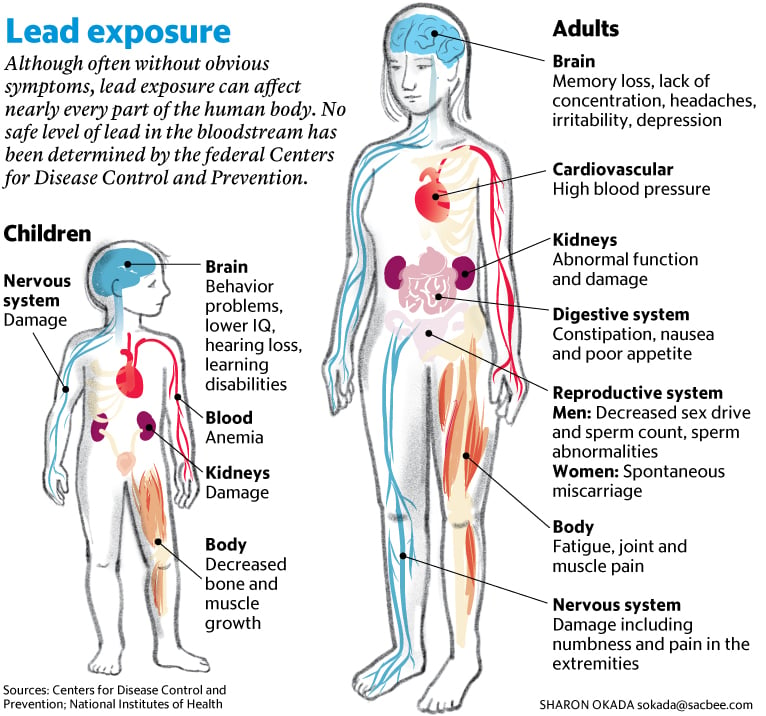
Lead affects more than just your water. Understanding the health impacts is the first step toward protecting yourself and your family.
If your tap shows an elevated lead result
A high result at one tap usually points to plumbing at or near that tap. Taking these steps and staying in touch with your water system is the best thing you can do.
Support schools and childcares
Beginning November 1, 2027, water systems must provide lead education every year to the schools and childcare facilities they serve, and offer them lead testing. Elementary schools and childcares are included in scheduled testing, and secondary schools can request testing any time. Every facility, at every level, is encouraged to take part, since testing is the only way to know what's in a facility's water.
Keep communities informed
If your service line contains lead, you'll be notified directly, along with information on replacement. Public education materials go to everyone, including renters, and in other languages where needed. Your water system also publishes a Consumer Confidence Report (CCR) each year with information on overall water quality and any steps being taken. It's a helpful resource for staying informed about your community's water.
Understanding these requirements is the first step toward protecting your community's drinking water. 120Water helps water systems with each part of LCRI compliance.
How 120Water helps.
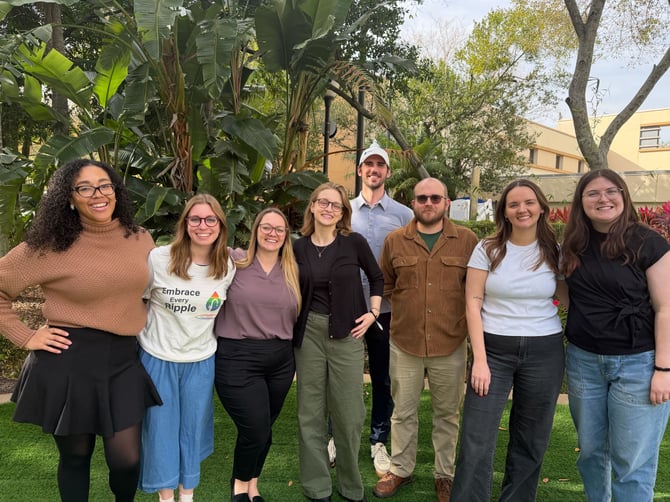
Water systems partner with 120Water to meet the requirements of the Lead and Copper Rule Improvements. Our Sampling and Distribution Consulting team, pictured here, runs these programs day to day. We're the people behind the letters, the sample kits, and the results, working alongside your water system to make every step clear and simple for the people it serves.
Asset Management
Every water system needs to know what its service lines are made of. 120Water helps water systems build and maintain their service line inventory. That's why you may receive a notice about your service line, or a request to help identify it through a survey, a photo, an inspection, or a water sample. Responding helps your water system complete its inventory and plan replacements.
Water Quality Testing
120Water manages lead testing programs for homes, schools, and childcare facilities from start to finish. We send the instructions and sample kits, coordinate testing with a certified laboratory, and deliver your results with a clear explanation and any recommended next steps. If you have questions along the way, our team is here to help.
All data is tracked and managed through 120Water's platform, so your water system can act quickly and keep you informed. When your water system reaches out, your participation makes a real difference for your community.
Your water sample kit.
Clean drinking water starts with knowing what's in it, and that's where your sample kit comes in. 120Water delivers everything you need, including instructions, sample bottles, and a prepaid return label. Most kits are returned by mail, and some water systems coordinate a pick-up instead. Check your instructions so you know exactly how to send yours back to the certified laboratory.
They might look like twins. Household kits typically use 1-liter bottles, while facility kits typically use a smaller 250 mL bottle for each tap. Bottle sizes can vary, so follow the instructions inside your kit.
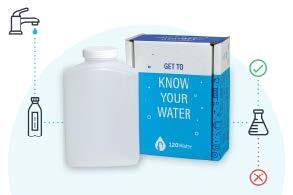
For households
Collect, seal, and mail your sample using the enclosed label, and you'll receive a letter with your results in the mail. It only takes a few minutes, and it helps protect your family and your whole community.
For facilities
You'll first receive instructions to help identify exactly which taps to sample, like drinking fountains and kitchen faucets. Then you collect a small amount of water from each one, seal it up, and mail it back. A letter with your results follows. It's a small time investment, and the impact reaches every child and staff member who drinks from those taps.
Your sample matters. Every returned sample gives your water system the data it needs to make informed decisions, track progress, and take action to protect your community. The more residents and facilities that take part, the clearer the picture becomes. Don't let your kit sit on the counter.