.png?width=3936&height=858&name=primary_lightnavy%20(1).png)
About 120Water
120Water is a water quality management platform partnering with water systems, utilities, state agencies, and local governments across the United States to navigate drinking water compliance. Specializing in lead testing and regulatory programs, 120Water provides the technology, logistics, and expertise communities need to protect public health.
Our services span the full spectrum of water quality management, from technical assistance and regulatory guidance to consumables like water testing kits, pitcher filters, and PFAS testing kits. We work alongside water systems and communities to deliver water quality education and communication campaigns, while continuously monitoring data returned from residents and facilities to ensure timely, informed action.
Understanding the Lead and Copper Rule Improvements (LCRI)
Finalized by the EPA in October 2024, the Lead and Copper Rule Improvements (LCRI) is a federal rule that changes how water systems across the country identify, monitor, and reduce lead in drinking water. Here is what the rule requires of your water system:
Track Service Lines
Replace Service Lines
Test the Water
Lower Lead Limits
The LCRI lowers the acceptable level of lead in drinking water from 15 to 10 parts per billion (ppb). If a water system exceeds this limit across their system, they are required to treat the water, alert the public, and in repeated cases, provide filters to affected customers. It is worth noting that some individual taps may show higher lead levels due to lead-containing plumbing or fixtures inside the home itself.

Lead affects more than just your water. Understanding the health impacts is the first step toward protecting yourself and your family.
If your tap shows an elevated lead result, there are a few simple steps you can take right away to protect yourself, your family, or the people in your care:
- Flush your tap first. Run your water for a few minutes before using it for drinking or cooking. Water that sits in your pipes for long periods tends to have higher lead levels, and flushing it out is a simple way to reduce your exposure. Always use cold water rather than hot, as hot water absorbs lead more easily.
- Use a filter certified to remove lead. Pitcher filters and faucet filters are affordable options that can significantly reduce lead in your drinking water.
- Contact your water system. They can confirm next steps, answer your questions, and connect you with additional resources if needed.
A high result at one tap does not necessarily mean your entire water system has a problem. Taking these steps and staying in touch with your water system is the best thing you can do.
Test Schools and Childcares
Keep Communities Informed
Understanding these requirements is the first step to protecting your community's drinking water. 120Water helps water systems meet every part of LCRI compliance.
How 120Water Helps
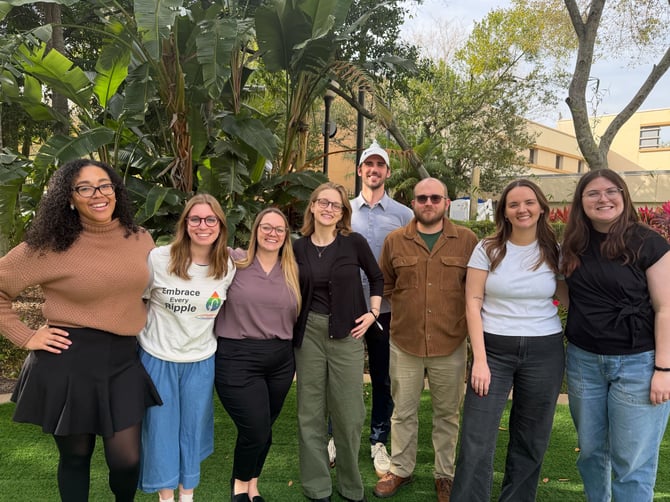
At 120Water, protecting public health is more than a mission. It is the reason our team shows up every day, and why we are proud to serve communities across the country. Pictured here is our Sampling & Distribution Consulting team, the group responsible for delivering our programs and making sure every water system and community we serve has the support they need.
Your water system needs to know what materials make up the service lines delivering water to your home or facility. To help, you may be asked to fill out a survey, collect a water sample using a test kit, or allow someone on your property or at your facility to inspect your service line.
120Water also supports your water system with broader water quality testing, including lead and PFAS. If your results show a concern, we can help. For households, that may include a certified pitcher filter, guidance on flushing your pipes, or information on service line replacement options available to you. For facilities, you're not expected to solve this alone. We'll walk you through what the results mean and connect you with remediation guidance and resources so you know exactly what your options are.
All data collected is tracked and managed through 120Water's platform, so your water system can act quickly and keep you informed.
When your water system reaches out for things like this, your participation helps keep your community's water safe.
Your Water Sample Kit
Clean drinking water starts with knowing what's in it. That's where your sample kit comes in.
Your water sample kit is a small but important part of keeping your community's drinking water safe. 120Water takes care of the hard part by delivering everything needed, whether to a home or a facility, including instructions, a sample bottle, and a prepaid return label. Most of the water systems we work with opt to have their consumers return their kits in the mail using the label provided. In some cases, your water system may coordinate a pick-up instead. Check your sampling instructions carefully to ensure you know how to properly send your kit back to the certified laboratory.
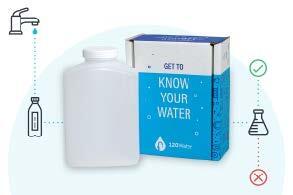
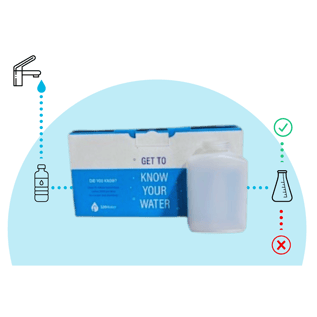
These photos might look like twins, but don't be fooled. Household kits typically use a 1-liter bottle, while facility kits typically use a smaller 250-mL bottle per fixture. Bottle sizes can vary, so your kit will always include exactly what you need, just follow the instructions inside.
 For Households
Collect, seal, and mail your sample using the enclosed label. You'll receive a letter with your results in the mail. It only takes a few minutes, but it means your family, and your whole community, gets one step closer to lead-free water.
%20(1).png?width=270&height=270&name=Utility%20Childcare%20Kit%20(1)%20(1).png)
.png?width=286&height=286&name=Utility%20Schools%20Kit%20(1).png) For Facilities: you'll first receive instructions to help identify exactly which fixtures, drinking fountains, kitchen faucets, and other outlets, will be sampled. From there, you collect a small amount of water from each fixture, seal it up, and drop it in the mail. You'll then receive a letter notifying you of your test results. It's a small time investment for the people managing it, but the impact reaches every child and staff member who drinks from that tap.
For Facilities: you'll first receive instructions to help identify exactly which fixtures, drinking fountains, kitchen faucets, and other outlets, will be sampled. From there, you collect a small amount of water from each fixture, seal it up, and drop it in the mail. You'll then receive a letter notifying you of your test results. It's a small time investment for the people managing it, but the impact reaches every child and staff member who drinks from that tap.
Every sample returned gives your water system the data they need to make informed decisions, track progress, and take action to protect your community. The more residents and facilities that participate, the clearer the picture becomes and the faster your water system can move toward eliminating lead from your drinking water for good. Your sample matters. Don't let it sit on the counter.